South Korea is a diverse country known for its beauty, culture, food, and exciting activities. We've got the ultimate travel cost guide to help you plan your adventure which includes average costs from fellow travelers, hotel rates, food prices, entertainment and sightseeing costs, and transportation, too. This South Korea trip budget calculator has everything you need to plan your spending wisely and still have an unforgettable time.
How much does it cost to travel to South Korea?
Our data from real travelers indicates that visitors to South Korea spend approximately $129 (₩172,849) per person, per day, on average, based on spending reported by over 80 real travelers, who have contributed over 2,000 individual expense records.
This travel cost data was last updated on . The daily average cost includes spending on accommodation, meals, local transportation, entry tickets, and sightseeing activities.
Since we know that the typical traveler spends about $129 (₩172,849) per day on a trip to South Korea, this amount can be used to help plan your overall trip budget, as well as compare South Korea to other destinations.
Past travelers here have spent, on average for one day:
$47 (₩62,991) on meals
$16 (₩21,533) on local transportation
$100 (₩133,776) on hotels
A one-week trip to South Korea for two people costs, on average, $1,812 (₩2,419,886). This includes accommodation, food, local transportation, and sightseeing.
Below, we go into even more details about typical prices for accommodation, food, transportation, and sightseeing activities in South Korea.
Costs by category are below, keep reading for more information.
How much do package tours cost in South Korea?
Organized tours are usually more expensive than independent travel, but offer convenience and peace of mind that your trip has been planned by a travel expert.
The average price for an organized tour package in South Korea is $363 per day. While every tour varies by total price, length, number of destinations, and quality, this is the daily average price based on our analysis of available guided tours.
Independent Travel
Traveling Independently has many benefits including affordabilty, freedom, flexibility, and the opportunity to control your own experiences.
All of the travel costs below are based on the experiences of other independent travelers.
Is South Korea expensive to visit?
South Korea is a moderately priced destination to visit. It's about average with most other countries for travel costs. The prices for food, accommodation, and transportation are all fairly reasonable.
Within Asia, South Korea is moderately priced compared to the other countries. The overall cost of travel here is comparable to Taiwan or Japan.
In South Korea, budget travelers spend $51 (₩68,016) per person per day on average, mid-range travelers spend $131 (₩172,849) per day, and luxury travelers spend around $333 (₩441,088) per day. These costs are calculated from the expenses of previous travelers to South Korea.
With a wide selection of accommodation and activities, South Korea makes it easy for any traveler to find something that fits their budget. You can find budget-friendly hostels in Seoul and Busan (Pusan), while luxury hotels cater to those seeking opulence, with mid-range hotels also available for families and couples.
South Korea can cost as much as you want, but eating at less expensive restaurants, taking public transit, and enjoying free activities can save you money.
How much money do I need for a trip to South Korea?
The average South Korea trip cost is broken down by category here for independent travelers. All of these South Korea travel prices are calculated from the budgets of real travelers. Also, you can see more details at How much does a trip to South Korea cost?
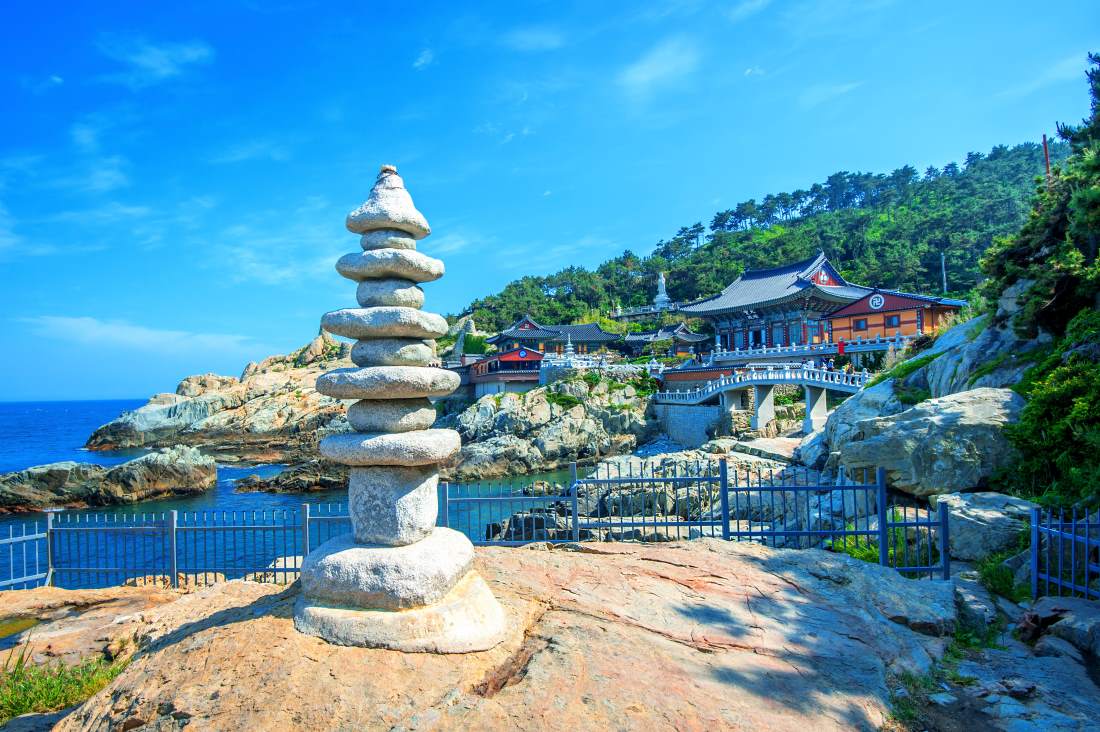
Haedong Yonggungsa Temple and the Haeundae Sea in Busan, South Korea.
How much does a one week, two week, or one month trip to South Korea cost?
A one week trip to South Korea usually costs around $906 (₩1,209,943) for one person and $1,812 (₩2,419,886) for two people. This includes accommodation, food, local transportation, and sightseeing.
A two week trip to South Korea on average costs around $1,812 (₩2,419,886) for one person and $3,624 (₩4,839,772) for two people. This cost includes accommodation, food, local transportation, and sightseeing.
Please note, prices can vary based on your travel style, speed, and other variables. If you're traveling as a family of three or four people, the price per person often goes down because kid's tickets are cheaper and hotel rooms can be shared. If you travel slower over a longer period of time then your daily budget will also go down. Two people traveling together for one month in South Korea will often have a lower daily budget per person than one person traveling alone for one week.
A one month trip to South Korea on average costs around $3,883 (₩5,185,470) for one person and $7,767 (₩10,370,940) for two people. The more places you visit, the higher the daily price will become due to increased transportation costs.
Accommodation Budget in South Korea
The wide range of prices for hotels and accommodation in South Korea can be very surprising. Some destinations have much higher price tags than others, and even within the same areas you can find a big difference between the budget-friendly and higher-end hotels. Also, during peak season, prices are much higher. You can save a good bit of money if you travel during the low season or shoulder seasons, as room prices adjust according to the overall demand. Booking in advance can often save you money, too.
Average Daily Costs
Calculated from travelers like you
The average price paid in South Korea for two people for a typical double-occupancy hotel room is $100 (₩133,776). For one person sharing a room, the average price paid for a hotel room is $50 (₩66,888) per night. These costs are from the reported spending of actual travelers.
Accommodation1
Hotel or hostel for one person
$50
₩66,888
Accommodation1
Typical double-occupancy room
$100
₩133,776
Hotels in South Korea
Looking for a hotel in South Korea? Prices vary by location, date, season, and the level of luxury. See below for options.
Find the best hotel for your travel style.
Kayak helps you find the best prices for hotels, flights, and rental cars for destinations around the world.
Actual Hotel Prices in South Korea
The average hotel room price in South Korea based on data provided by Kayak for actual hotel rooms is $58 in the low season and $108 in the peak season. Below are the average prices for each budget category. (Prices in U.S. Dollars, before taxes & fees.)
Seoul
In Seoul, which is a large city, expect a fairly wide range of choices and prices for accommodation. Hotel prices here can range from $32 in the low season to $263 during the peak season. L'Escape, a Luxury Collection Hotel, Seoul Myeongdong ($211) is one of the best hotel options here, and RYSE, Autograph Collection is also good, and starts at $243. You can expect to pay around $21 for a dorm bed if you decide to stay in a hostel. Since many travelers spend up to seven days, it's important to find a cozy spot in a prime location if you're planning to explore for an extended time.
Recommended Properties
Local Transportation Budget in South Korea
Average Daily Costs
Calculated from travelers like you
On average, past travelers have spent $16 (₩21,533) per person, per day, on local transportation in South Korea. The cost of a taxi ride or rideshare service (Uber/Lyft) in South Korea is significantly more than public transportation.
Local Transportation1
Taxis, local buses, subway, etc.
$16
₩21,533
Local Transportation Tips
With an excellent train system, South Korea provides access to nearly every part of the country. Train fares are quite reasonable, and the rides are both fast and comfortable. When the train lines don't reach your destination, long-distance and regional buses are a great alternative.
For those looking to save money, utilizing public transit is an excellent option. Many areas offer dependable public transportation systems, with some of the best found in Seoul. Additionally, many travelers prefer to explore on foot, allowing for a more personal experience wandering through the neighborhoods and seeing the local culture. If walking is your preference, you'll love your time in these cities.
In bigger cities such as Seoul, it's wise to purchase a multi-day pass if you intend to use public transit regularly. Depending on your travel frequency, you might save a considerable amount instead of buying individual tickets.
It's much easier to avoid driving in the larger cities like Seoul because they are busy and crowded. Parking is often expensive and traffic is challenging. You can save money by not renting a car while visiting the cities, and instead use public transit or walking.
If you have a car in one of the bigger cities, check with your hotel beforehand about the parking situation. You may have to pay to park either at the hotel or in a nearby public garage. Either way, it might be cheaper to find somewhere further out of town to park your car.
Recommended Services
What did other people spend on Local Transportation?
The numbers below highlight common transportation expenses in South Korea, gathered from actual travelers. These prices give a good estimate of what you're likely to spend while getting around the city. However, your personal costs will depend on your travel style, since taxis and hired cars tend to be much pricier than public transportation.
Seoul City Pass Plus
₩10,000
Metro Ride
₩1,350
Subway Card
₩5,000
Short Taxi Ride
₩7,000
Food Budget in South Korea
Average Daily Costs
Calculated from travelers like you
While restaurant and meal prices in South Korea can vary significantly, the average cost of food in South Korea is $47 (₩62,991) per day, per person, based on the spending habits of previous travelers.
Food2
Meals for one day
$47
₩62,991
When dining out, the average daily cost for food in South Korea is about $48 (₩62991) per person. Previous travelers have typically spent from $19 to $125 per day. Generally, breakfast and lunch will cost less than dinner, but that will vary based on the type of restaurant and what you order.
Typical meal prices in South Korea are as follows:
Breakfast: $9 to $14
Lunch: $7 to $24
Dinner: $17 to $38
Coffee: $4
Fast Food or Street Food: $8
Korean food is growing in popularity throughout Europe and the United States. The meals are usually based around a rice, a soup, and a protein like fish or meat. These staples are accompanied by an assortment of side dishes which are referred to as banchan.
Kimchi: This is the most famous and popular banchan dish. It is served as an accompaniment to most Korean meals and it's made from fermented cabbage and chili. Be careful though because it can be very spicy.
Doenjang: This is another side dish that is served with most meals. It's made from a fermented soybean paste and is comparable to Japanese miso.
Bulgogi: This is a type of Korean barbeque that is made from various marinated meats. Diners generally cook the meat at the table on a charcoal grill.
Popular Culinary Destinations
South Korea is a world-class destination for food lovers, and its cuisine is appreciated everywhere. A large number of visitors travel just to indulge in the local fare. Some of the best cities for culinary experiences are Seoul.
Seoul Seoul is well known for its food scene. Food is a cultural obsession here, and you'll find everything from world class street food to award winning restaurants. The dishes are so much more diverse than Korean barbecue and kimchi. Many dishes are very spicy, with popular local foods including gamjatang (pork and potato soup) and jeon (savory pancakes).
Food & Dining Tips
When you have children in tow, look for places that provide a kids menu. This can be a great way to cut costs, as those meals are often much cheaper. Since some restaurants don't list the kids' options, make sure to ask the waiter before you decide.
Many hotels offer complimentary breakfast, but some charge extra for this service. Prices and quality can vary based on the hotel. Being informed in advance can help you decide whether to indulge in a lavish hotel buffet or simply visit a nearby bakery or café that may offer cheaper options.
Carrying a water bottle is a smart choice instead of buying drinks. It's also a way to support the environment.
When planning a tour, it's important to clarify in advance which meals are part of the package. You may be responsible for paying for some meals yourself, which could increase your overall expenses.
If you're looking to experience the culinary culture in South Korea, taking a food tour or cooking class is a terrific way to do it. After all, cuisine is one of the reasons why so many people visit. Some of the best food-related activities here include:
Royal Seoul Cooking Class in a 100-Year-Old Hanok for $108 details
Korean Home Style Cooking Class in Gangnam Seoul for $72 details
Korean Cooking Class Full Meal with BBQ on an All in One Table for $89 details
K-food cooking Japchae Mandu Tteokbokki & Fishcake for $89 details
Recommended
What did other people spend on Food?
Listed below are typical food prices in South Korea, based on the actual spending of previous travelers. These figures provide an estimate of what you might expect to pay for meals. However, your personal expenses will depend on your dining preferences, the restaurants you choose, and what you decide to order.
Donkatsu (Charles Restaurant)
₩10,000
Carp Bread
₩1,000
McDonald's
₩6,185
Donut
₩2,500
Burger
₩6,200
Breakfast and Coffee for 2
₩9,500
Donut
₩1,000
Waffle
₩1,000
Sightseeing and Activities Budget in South Korea
Average Daily Costs
Calculated from travelers like you
Sightseeing activities, entertainment, and entrance tickets in South Korea typically cost an average of $27 (₩35,611) per person, per day based on the spending of previous travelers. This includes fees paid for admission tickets to museums and attractions, day tours, and other sightseeing expenses.
Entertainment1
Entrance tickets, shows, etc.
$27
₩35,611
The Best Sightseeing Destinations
With a variety of destinations that are not as heavily trafficked by tourists, South Korea offers opportunities to find unique hidden gems. Some of the more visited areas include Seoul.
Seoul Seoul is the capital city of South Korea. It's a high tech city that has many skyscrapers and a modern subway system. There's also a long history with many temples and palaces to explore. The city is a foodie paradise with many street markets as well as award winning restaurants. While its not as popular a tourist destination as some other major Asian cities, it has an authenticity that makes it a unique destination.
Sightseeing Tips
A nice way to explore destinations in South Korea is with local tours that last just a few hours. This way you can see as much as possible in an efficient way with knowledgable guides. Prices vary by the type of activity or tour, the dates, and the size of the group. Here are a few of the highest rated tours by previous visitors:
Private DMZ Tour with North Korean Defector + N Korean Lunch for $160 details
DMZ 2nd Tunnel, Pocheon Sky Bridge & Waterfall Tour from Seoul for $107 details
Busan Private Guided Tour : Enjoy Customized Tours only for you! For $165 details
Recommended Activities
What did other people spend on Entertainment?
Outlined below are some typical prices for entry fees and activities in South Korea. They have been reported from the expenses of previous travelers. These costs provide an idea of what you might need to spend, though your individual expenses will depend on the activities you participate in, the places you visit, and how often you choose budget-friendly or free activities.
Kimchi Museum
₩3,000
Palace Tickets
₩8,000
Movie Ticket
₩8,000
Nightlife Budget in South Korea
Average Daily Costs
Calculated from travelers like you
The average person spends about $12 (₩15,553) on nightlife and alcoholic beverages in South Korea per day. The more you spend on alcohol, the more fun you might be having despite your higher budget.
Alcohol2
Drinks for one day
$12
₩15,553
Popular Nightlife Destinations
South Korea is a highly sought-after spot for nightlife, drawing visitors from across the globe to enjoy its vibrant scene. Some of the top nightlife destinations are Seoul.
Seoul
The nightlife scene is a highlight for many young visitors in Seoul. This is definitely a work hard/play hard city, with locals working long hours during the day and then partying hard late into the night. The nightlife scene is strong both during the week and on weekends. There are bars, clubs, and lounges that are frequented by locals and tourists alike.
Nightlife Tips
Enjoying the nightlife is always fun, but if you cut down on alcohol, you'll see a noticeable difference in your travel costs.
Nightlife activities and tasting tours are popular in South Korea. A few favorites from other travelers include:
Discover Makgeolli: Inside Seoul's Hidden Urban Brewery for $12 details
Seoul Gangnam Pub Crawl: Korean Drinking Games & BBQ for $189 details
Seoul Chunpoong Brewery: Korea’s Finest Liquor Tour for $80 details
Soju Tasting at Distillery - story of 3 pigs for $48 details
Recommended
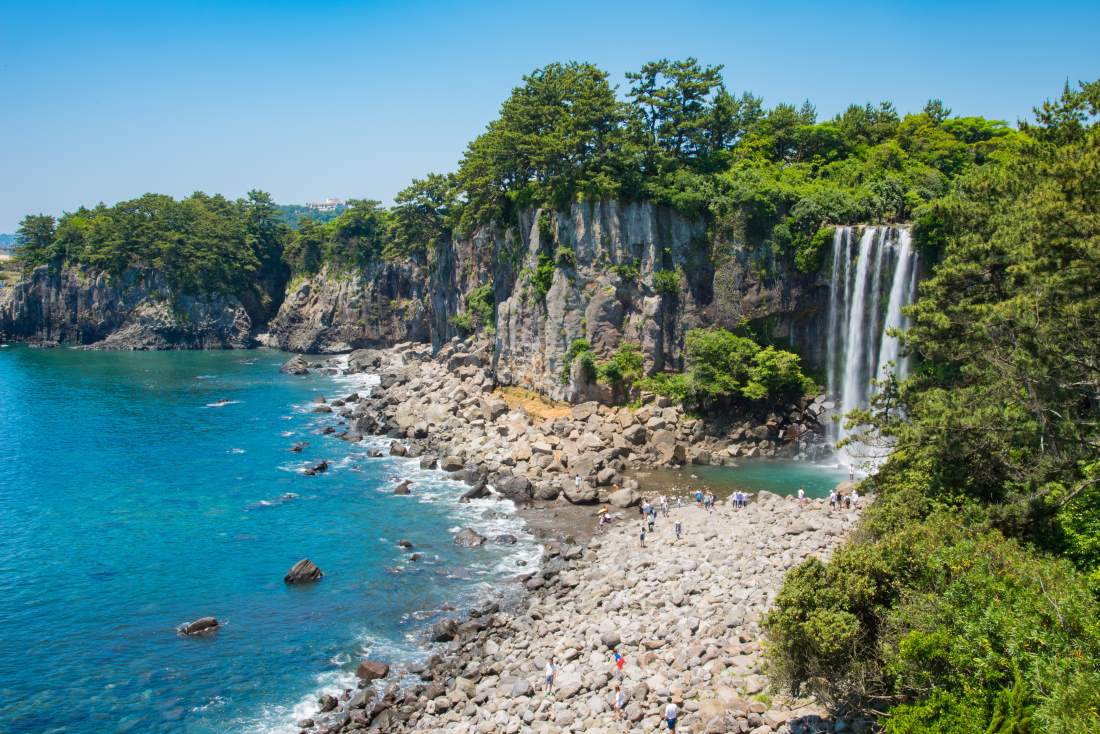
Waterfall on Jeju-do, South Korea
Budgeting and Travel Tips
The peak season in South Korea is in the summer when it's buzzing with tourists, and with the surge in visitors comes an increase in prices. Hotels fill up fast, and finding affordable accommodation can be a bit of a challenge. If you want to keep things budget-friendly, visiting during the shoulder or low seasons is a great way to avoid the crowds and save some money.
In places like Seoul, visitors tend to stay for longer stretches - usually about a week. It's especially popular with families who find renting an apartment or vacation home more practical. Not only do you get extra space to spread out, but a kitchen and other amenities can make your stay both comfy and budget-friendly.
Budgeting Challenges
South Korea isn't exactly a hotspot for hostels, so if you're expecting to stay in a cheap dorm to save money, you might want to adjust your plans. Instead, find a cheap hotel or apartment rental.
Outside of Seoul, getting around South Korea can be challenging due to limited public transport options. Renting a car or securing transportation in advance is key, although it could mean you'll have less to spend on other parts of your trip. Tours are often good options to help you get around if you don't want to drive yourself.
For families, many hotels in Seoul are not large enough to accommodate a family of four. Space can be tight, so be prepared to find a larger hotel or pay for two rooms.
South Korea is a very modern and cosmopolitan country on the southern half of the Korean Peninsula. It's one of the most densely populated countries in the world, yet currently has a very low birthrate. There is a large Christian and Buddhist population spread throughout the country. The Korean culture is a fascinating one. It is heavily influenced by the Chinese culture, but there remain major fundamental differences between the two, the most obvious being the food, spoken language, and written language. The Korean population is very proud of their distinct culture and you are sure to experience this during your time in South Korea. In addition to a unique food and architecture style, Koreans enjoy sports, with some of their favorites being baseball, soccer, and badminton.
Many people overlook South Korea as a travel destination in part because it is considered so modern and lacking in some of the traditional culture found in other nearby countries. Those who take the time to visit this fascinating country will find that it offers a unique perspective into the Asian culture.
South Korea is also easily accessible in route to other travel destinations throughout Asia. Many flights have a layover at Incheon International Airport. It is recommended that you extend your layover for at least a few days so you can explore parts of this interesting country. Check out this 3-day Seoul itinerary for some ideas.
South Korea is divided into several distinct regions. As a tourist you'll find something interesting in each one, but some of the more popular places to visit include Gyeonggi, where you'll find the city of Seoul. Gangwon is well known for its natural beauty, beaches, and ski resorts. North Chungcheong has many national parks while South Chungcheong has some famous hot springs. North Gyeongsang is the place to go if you're looking for history and culture, but South Gyeongsang has many impressive temples and some nice seaside communities. Finally, Jeju is a notable honeymoon destination for Koreans.
Whether you're visiting Korea for work or pleasure, you are sure to be welcomed openly into the homes of many Koreans. You'll quickly be made to feel right at home and you'll have a memorable and unique experience during your time here.
At A Glance
Public transportation in South Korea is very modern and easy to use. There are trains, buses, and planes that connect most cities. Most larger cities also have their own subway system which is usually modern and efficient. You can also travel around town by taxi or by public bus. Although there is almost every form of transportation you could need throughout the country, you'll usually get the best price if you take the bus. This may also be the slowest form of transportation however.
South Korea sells a KR Pass to any foreign non-resident visiting the country. The pass offers unlimited travel for a set period of time on Korail train. There are many restrictions on the pass so you should really consider the cost effectiveness of purchasing it before paying the money. First class and sleeping cars are not included on the pass and the limitations are even stricter during holiday and peak periods of travel. In order to make up for the cost of the pass you will have to plan some long, frequent trips through the country. If you do decide to buy a KR Pass it must be purchased five days in advance.
Karaoke, commonly referred to as noraebang, is a popular activity in most major cities around South Korea. You should try this at least once if you're looking for the full cultural experience.
If you're in the country in the middle of July head to the city of Boryeong in Chunchungnam. They host a famous Mud Festival that is popular throughout the country. Participants are covered in a thick mud and participate in any number of activities which range from body painting to mud wrestling. There's also a nearby beach that hosts countless parties during this time. If you're planning to go to the festival make sure you reserve a hotel room well in advance as places tend to fill up.
Although there are ATMs throughout the country, it can be quite difficult to find one that accepts foreign cards. Look for a Citibank ATM or the special Global ATMs. These are most frequently found in airports, subway stations and Family Mart convenience stores. If you're heading out of the major cities make sure you carry plenty of cash with you.
Korean Demilitarized Zone: This area separating North and South Korea is commonly referred to as the most heavily armed area in the world. It was originally established by a cease-fire in 1953. The mysterious nature of North Korea and the ominous descriptions of this area attract tourists from around the world. The general area covers about 2 kilometers between the two countries.
Gyeongju: Located in the North Gyeongsang province, this is the former capital of Silla. It has many historic and cultural sights with some of the most popular being Gyeongju National Park, Bulguksa Temple, and Seokguram Grotto.
Jeju Island: Off the southern coast of Korea, this island is a top honeymoon destination both inside and outside of Korea. It was formed by a volcano and offers beautiful scenery and fun activities including horseback riding and hiking.
Realistic Expectations for Your Travel Budget
Setting realistic expectations for your budget is crucial to knowing how much you'll likely spend. While many like to think of themselves as "budget" travelers who can get by on just $51 a day, the truth is, most find that kind of travel less than comfortable. Think about what you genuinely enjoy and how you've traveled before. Do you lean toward resorts and vacation rentals, or the lower-priced hostels? Is eating out a big deal for you? What type of transportation do you like? Your responses to these questions will play a significant role in shaping your overall travel budget.
What is a budget traveler, anyway?
Many people might hear that you can explore South Korea for just $51 a day, but if you're not ready to sacrifice some comforts, be prepared to spend quite a bit more.
Backpackers often manage to stick to this tight budget, but it usually means sleeping in hostel dorms, dining at the cheapest eateries or grabbing fast food, relying on public transport or walking everywhere, and limiting themselves to free attractions.
Fortunately, South Korea has a large number of hostels. You'll find the greatest concentration in Seoul and Busan (Pusan). A lot of destinations have fantastic public transportation, making it easier for budget travelers to bypass pricey taxi or Uber/rideshare services. For visitors of all kinds, food is an important aspect of South Korea, but those on a budget often eat street food or whip up meals in their hostels, potentially missing out on the culinary experiences available.
What Makes You an Average Traveler?
If you're on vacation as a couple or with family, you'll likely choose a mid-range hotel, eat at popular restaurants, and visit the must-see attractions, which often come with entry fees. Most travelers will want to visit the major sights, and landmarks. As most things cost money, it's best to expect a daily budget of about $131 per person.
Looking to Travel in Luxury?
To experience a truly luxurious getaway, where everything from the service to the accommodation is elevated, plan for a daily price near $333. This means booking luxury hotels, dining in five-star restaurants, enjoying exclusive excursions, and hiring private drivers. You'll be vacationing among the wealthy in destinations like Seoul and Pyeongchang. Another option would be to splurge on a multi-day high-end tour that takes care of everything for you, such as The Best of South Korea Tour - offered by Tweet World Travel.
We've been gathering travel costs from tens of thousands of actual travelers since 2010, and we use the data to calculate average daily travel costs for destinations around the world. We also systematically analyze the prices of hotels, hostels, and tours from travel providers such as Kayak, HostelWorld, TourRadar, Viator, and others. This combination of expenses from actual travelers, combined with pricing data from major travel companies, gives us a uniqe insight into the overall cost of travel for thousands of cities in countries around the world. You can see more here: How it Works.
Bryan & Laurie | Budget Your Trip
Bryan and Laurie started Budget Your Trip so that everyone could find out the real costs of traveling to destinations around the world. Bryan has visited 61 countries, which is exactly one more than Laurie, and she won't let him forget it! Also avid photographers, they enjoy entrenching themselves within the local culture to learn more about the people of a place. Otherwise, they can be found enjoying an exotic meal or a passionate conversation about global events... and also finding out how much everything costs.
Subscribe to our Newsletter
By signing up for our email newsletter, you will receive occasional updates from us with sales and discounts from major travel companies, plus tips and advice from experienced budget travelers!
1 Categories averaged on a per-item basis. 2 Categories averaged on a per-day basis.
For example, the Food2 daily average is for all meals for an entire day, while Entertainment1 is for each individual purchase. Thus, the overall daily average cost is not a summation of the individual categories.
Budget Your Trip is all about finding out how much everything costs so that you can travel cheaper and longer. Created by avid travelers Laurie and Bryan, our goal is to help you plan your next trip on the right budget. With average daily travel costs that are calculated from the budgets of real travelers, plus an analysis of hotel and tour prices, you can find out how much money you need to plan your next adventure. We also have plenty of travel advice, accommodation reviews, and activity suggestions.
Some of the links on this website are sponsored or affiliate links which help to financially support this site. By clicking the link and making a purchase, we may receive a small commission, but this does not affect the price of your purchase.
Travel Cost Data
×
You are welcome to reference or display our travel costs on your website as long as you provide a link back to this page.
A Simple Link
For a basic link, you can copy and paste the HTML link code or this page's address.
Travel Cost Widget
To display all of the data, copy and paste the code below to display our travel cost widget. Make sure that you keep the link back to our website intact.
Questions?
If you need more information, or if you have questions, please contact us.

 Gyeongbokgung Palace at night, Seoul, South Korea