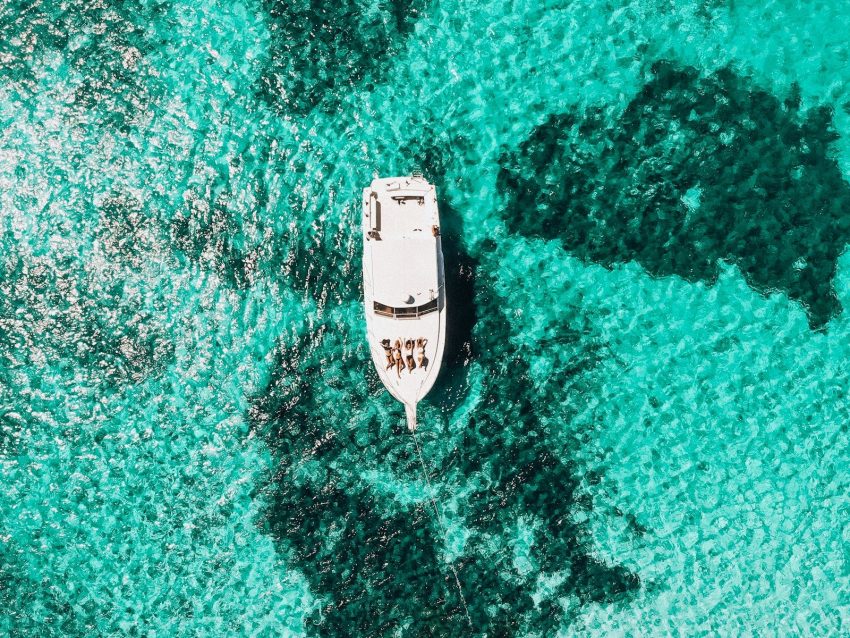
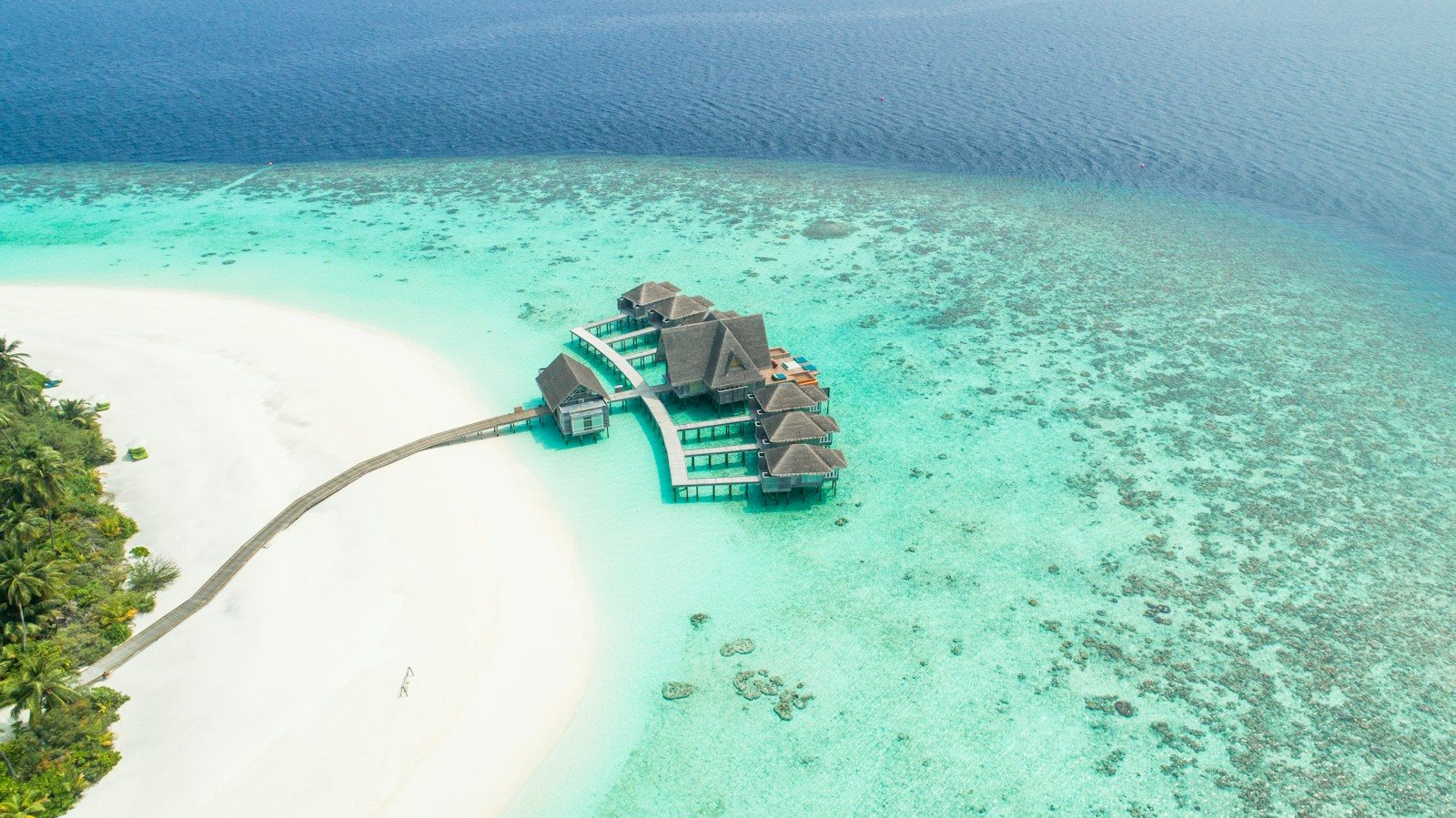
The Maldives has a reputation for being expensive, and the overwater villa photography does nothing to dispel it. But the cost of a diving trip there depends almost entirely on one decision: whether you stay on an island or on a boat.
Those two formats produce very different totals. A resort holiday with daily diving can pass $500 a day once boat fees and meals are counted. A liveaboard bundles the same week into one rate that usually works out cheaper per dive, while delivering roughly twice as many of them.
This guide breaks down what each format costs, what the headline price includes, and where the extras sit.
Resort or liveaboard: the decision that sets your budget
Let’s take a look at the two different options.
With the first option of staying in a resort, a Maldivian resort sells you a room. Then, diving is a separate line item, charged per dive, plus boat fees, plus equipment, plus the plankton of small costs that attach to an island where you cannot walk anywhere else.
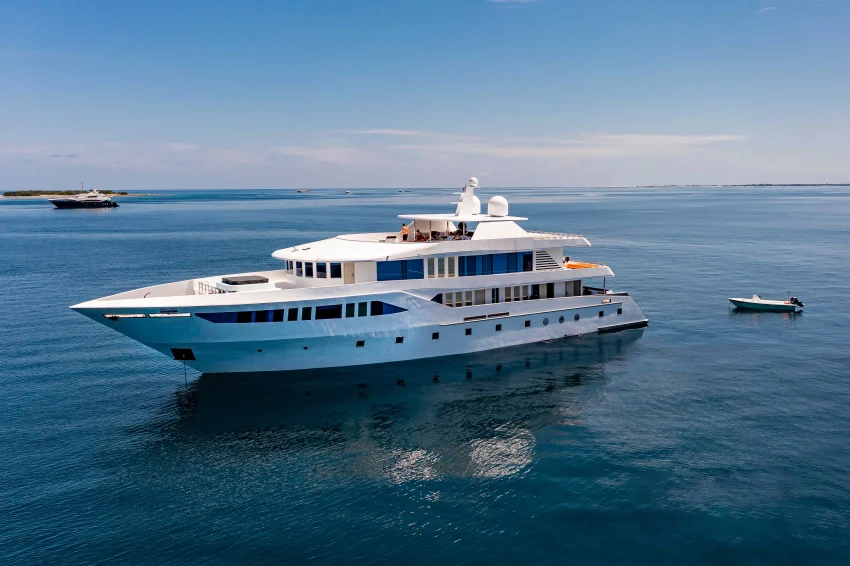
With the second options, a liveaboard sells you the entire trip. One rate covers the cabin on the boat, every meal, the diving, the tanks and weights, and the transfers between sites.
Here is how the costs of the two compare over a week of diving.
| Island resort | Liveaboard | |
| Typical week, per person | $3,500 to $7,000+ | $2,700 to $4,100 |
| Dives included | None, charged separately | 25 to 30 |
| Dives per day | 1 to 2 | 3 to 4 |
| Cost per dive | $70 to $120 on top of the room | Included in the rate |
| Meals | Often extra, or a costly board upgrade | All included |
| Dive sites reachable | House reef and nearby points | Multiple atolls across one trip |
| Non-diving facilities | Spa, pools, restaurants, beach | Sun deck, limited space |
The arithmetic per dive is where the gap opens. A seven-night liveaboard starting around $2,695 that delivers 25 to 30 dives works out near $90 to $108 per dive, and that figure already contains your bed and all your food. At a resort, $90 buys the dive alone.
None of this makes resorts the wrong choice. If you are travelling with someone who does not dive, or you want a spa and a beach between dives, the resort earns its premium. For divers whose week is built around getting in the water, the boat wins on both count and cost.
What a liveaboard week actually costs
Liveaboard pricing in the Maldives works on route and duration rather than a single nightly rate. Longer trips reach further from the capital, which means domestic flights and more remote atolls, and the price reflects that.
Spirit Liveaboards, which runs the Spirit of Maldives, publishes its routes with starting rates, and they give a useful picture of the market:
| Route | Length | Season | From |
| Heart of the Maldives | 7+ nights | Year round | $2,695 |
| The Deep South | 7 nights | February to April | $2,814 |
| Wonders of the Northern Atolls | 10+ nights | Year round | $4,020 |
| Explore the Far North | 10+ nights | March to April | $4,020 |
| Equatorial Atolls | 10+ nights | December to April | $4,020 |
| The Deep South | 10+ nights | February to April | $4,020 |
The seven-night central-atoll route is the entry point for most divers, and it is the one that makes the budget comparison work. The longer southern and far-northern routes cost more because they go where day boats cannot.
Travellers pricing up Maldives diving holidays should check what sits inside the rate before comparing operators, because the inclusions vary more than the headline numbers suggest. On Spirit the rate covers the cabin, all meals, up to four dives a day, tanks, weights, dhoni transfers and atoll permits, with nitrox included rather than charged as an upgrade. Many boats bill nitrox at $120 to $200 a week, so that single line changes the real comparison.
One detail worth knowing if you are not travelling alone: non-diving guests are welcome on all itineraries, and a 10% discount is applied to their cabin rate. That softens the main argument for choosing a resort instead. The non-diving guests enjoy meals, great views, swimming and snorkeling, and other fun activities, too.
Flights, transfers and the domestic leg people forget
Almost every international flight to the Maldives lands at Velana International Airport (MLE) on Hulhule island, next to Malé. Return fares vary enormously by origin and season:
| From | Typical return economy |
| London or Western Europe | $600 to $1,100 |
| US East Coast | $900 to $1,500 |
| US West Coast | $1,100 to $1,800 |
| Dubai or the Gulf | $300 to $600 |
| Singapore or Southeast Asia | $400 to $800 |
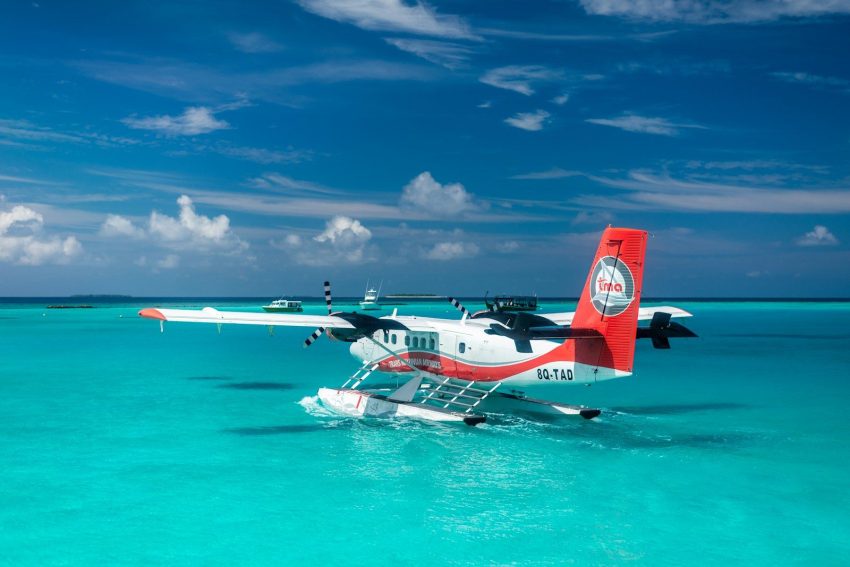
The cost travellers miss is the domestic leg. Central-atoll routes board directly from Malé with no extra flight. Northern and southern routes do not.
A far-northern itinerary involves a 50-minute flight between Malé and Hanimaadhoo. Deep South and Equatorial routes need a 60-minute return flight to Kooddoo or Gan. These run on Maldivian Aero, required a booking well ahead, and typically add $200 to $400 per person.
Budget the connection time as carefully as the money. Velana requires a minimum two hours between domestic and international flights, domestic check-in closes an hour before departure, and delays are common enough that two hours is a floor rather than a plan.
When you go changes what you pay
The Maldives sits in the monsoon belt of the northern Indian Ocean, and the two seasons are defined by wind rather than rain alone.
| Northeast monsoon | Southwest monsoon | |
| Months | Mid-December to April | May to November |
| Average rainfall | 75 mm per month | 215 mm per month |
| Average sunshine | 256 hours per month | 208 hours per month |
| Sea conditions | Calmer, better visibility | More variable |
| Prices | Peak | Lower |
| Draw for divers | Clear water, easy crossings | Plankton brings mantas and whale sharks |
Air and water temperatures barely move across the year, sitting around 25°C to 30°C with humidity of 70% to 80%.
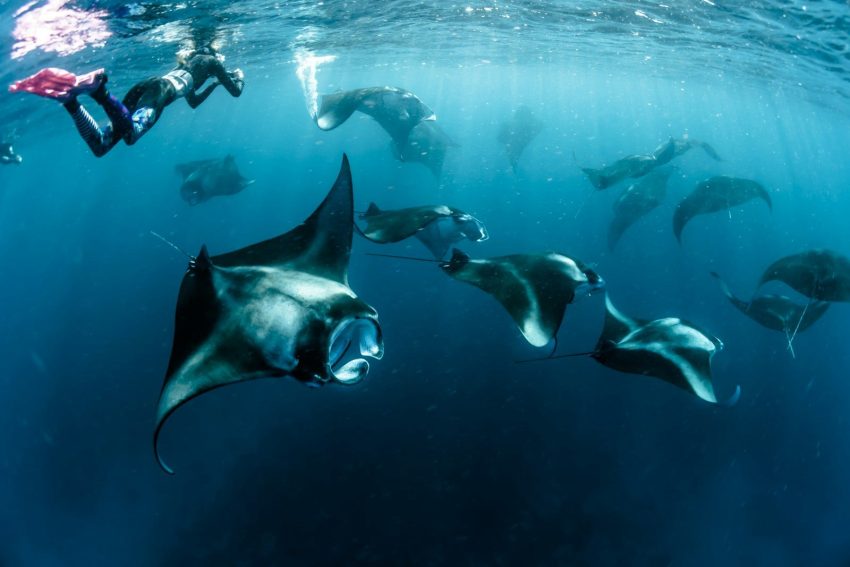
The counterintuitive part is that the cheaper season is often the better one for big animals. Plankton pushed through the channels during the southwest monsoon is what draws the big filter feeders in, and operators plan their manta season in the Maldives departures around it. May to November trades some visibility for a far better chance of the encounters most divers came for.
If your budget is tight and your priority is wildlife rather than photography conditions, the low season is not a compromise.
The costs that sit outside the headline rate
Even an inclusive liveaboard rate leaves a handful of items to budget separately.
| Item | Typical cost | Notes |
| Equipment rental | $150 to $250 per week | Full set; bring your own to avoid it |
| Nitrox | $0 to $200 per week | Free on some boats, charged on most |
| Crew tips | $150 to $300 per week | Usually 5% to 10% of the trip cost |
| Dive insurance | $50 to $120 | Must cover scuba and hyperbaric treatment |
| Domestic flights | $200 to $400 | Northern and southern routes only |
| Drinks and bar | $100 to $250 | Soft drinks sometimes included |
| Tourist visa | Free | 30 days, issued on arrival |
Two of these are worth sorting out before you book. Dive insurance has to name scuba cover and hyperbaric treatment explicitly, because standard travel policies routinely exclude both, and evacuation from a remote atoll is not a bill you want to meet yourself.
The other is certification. Most Maldivian liveaboard itineraries require Advanced Open Water as a minimum, and the harder southern and equatorial routes typically ask for 100 logged dives as well. Arriving under-qualified for the route you booked is an expensive mistake, and a season-defining one.
Entry is otherwise straightforward. The 30-day tourist visa is free on arrival, but you need a passport with six months of validity, confirmed return tickets, a booking with a registered operator, and a Traveller Declaration submitted electronically within 96 hours of your flight.
Three realistic budgets
These totals assume one person flying from Western Europe, including flights, and cover everything from the departure gate to the crew tip.
| Budget | Mid-range | Premium | |
| Trip format | 7-night central liveaboard, low season | 7-night central liveaboard, high season | 10-night Deep South liveaboard |
| Trip rate | $2,695 | $3,200 | $4,020 |
| International flights | $650 | $900 | $900 |
| Domestic flights | $0 | $0 | $350 |
| Equipment rental | $0, own gear | $180 | $0, own gear |
| Nitrox | $0, included | $0, included | $0, included |
| Insurance | $60 | $90 | $120 |
| Tips and drinks | $250 | $350 | $450 |
| Total | $3,655 | $4,720 | $5,840 |
| Dives | 25 to 30 | 25 to 30 | 35 to 40 |
| Cost per dive | $122 to $146 | $157 to $189 | $146 to $167 |
The budget column is what a Maldives diving week costs when you book the shoulder season, bring your own gear and pick a central-atoll route. It sits well below what most people assume the destination demands.
The premium column shows something useful too. The ten-night Deep South route costs more in total but not much more per dive, because the extra nights come with extra diving.
Where the savings actually are
The season is the biggest variable that affects your costs.. May to November is cheaper and gives better odds on seeing manta rays and whale sharks, at the cost of some visibility. For most divers that is a good trade.
Route matters nearly as much. Heart of the Maldives itineraries board straight from Malé, so you skip the domestic flight, the fare that goes with it and a travel day at each end. The southern and far-northern routes are better diving, but you pay for the privilege twice.
Gear is the one cost you can eliminate outright. A week of rental runs $150 to $250, so if you dive more than once a year, owning a regulator, BCD and computer pays for itself fast.
After that it comes down to reading the inclusions properly. Free nitrox is worth $120 to $200 a week and changes whether four dives a day feels comfortable or punishing. A boat offering 25 dives at $2,700 beats one offering 18 at $2,400, so compare cost per dive rather than the headline. And book domestic connections early, because Maldivian Aero flights to Hanimaadhoo, Kooddoo and Gan do sell out, leaving you with either a higher fare or a missed departure. Check flight prices here.
One last thing if you are not travelling alone. Operators who discount non-diver cabins, often by around 10%, can make the whole boat cheaper than two resort nights plus diving for the same pair.
Frequently asked questions
What is the cheapest way to dive the Maldives?
A seven-night central-atoll liveaboard in the southwest monsoon, booked with your own equipment. Rates start around $2,695 including all meals and 25 to 30 dives, which is usually less per dive than a resort once boat fees and food are added.
How much does a single dive cost in the Maldives?
At a resort, roughly $70 to $120 per dive before equipment and boat fees. On a liveaboard the dives are inside the trip rate, which works out near $90 to $110 each including your accommodation and meals.
Do I need to budget for a domestic flight?
Only on some routes. Central-atoll itineraries board from Malé with no extra flight. Far-northern and deep-southern routes need a domestic leg to Hanimaadhoo, Kooddoo or Gan, adding roughly $200 to $400.
Is nitrox included on Maldivian liveaboards?
It varies. Some operators include it, others charge $120 to $200 per week. Check before comparing rates, because it is one of the larger single differences between otherwise similar boats.
What certification do I need?
Most Maldivian liveaboard itineraries require Advanced Open Water. Southern and equatorial routes with strong currents usually also require around 100 logged dives.
How much should I tip the crew?
Around 5% to 10% of the trip cost, which works out at roughly $150 to $300 for a week. It is customary rather than compulsory, and usually pooled across the crew.

Bryan has visited 62 countries, which is exactly one more country than his wife, and she won’t let him forget it! Also an avid photographer, he enjoys entrenching himself within the local culture in order to learn more about the people of a place. He is the co-founder of Budget Your Trip and loves a good adventure, an exotic meal, or a passionate conversation about global events. And he also loves to find out how much stuff costs, which is why he and his wife started Budget Your Trip.
Sign up to our email newsletter to receive sales, deals, and discounts from major travel companies!