

One of the hardest parts of planning a trip is figuring out how much it will actually cost. Flights and hotels are usually easy to search, but they only tell part of the story. A realistic travel budget also needs to include food, local transportation, tours, attractions, museum tickets, airport transfers, tips, travel insurance, visas, baggage fees, and all the small daily expenses that appear once you are already on the road.
The challenge is that no single website gives you every cost perfectly. A flight search tool can show airfare, but it will not tell you how much you will spend on meals. A hotel booking site can show nightly rates, but it will not show museum tickets, taxis, or restaurant prices. A travel blog might give a helpful personal example, but that person’s travel style may be completely different from yours.
The best way to find travel costs is to use several sources together. Start with broad destination cost data, then confirm the specific prices that matter for your trip: flights, accommodation, food, transportation, activities, and required fees.
Here are the best places to find travel costs before you book.
1. Budget Your Trip: Best for Average Daily Travel Costs
The best place to start is Budget Your Trip, especially when you are still deciding where to go or trying to understand the overall cost of a destination.
Budget Your Trip provides average travel costs for destinations around the world, using real expenses from travelers. This website has been gathering real travel costs from hundreds of thousands of travelers since 2010, and the methodology explains that the travel costs come from real travelers and are aggregated and averaged from real trips.
This makes Budget Your Trip especially useful for answering the big planning question:
How much does this destination usually cost per day?
That question is different from “How much is one hotel?” or “How much is does the flight cost?” A trip budget needs to include the whole destination experience: accommodation, food, transportation, activities, entertainment, and other daily expenses.
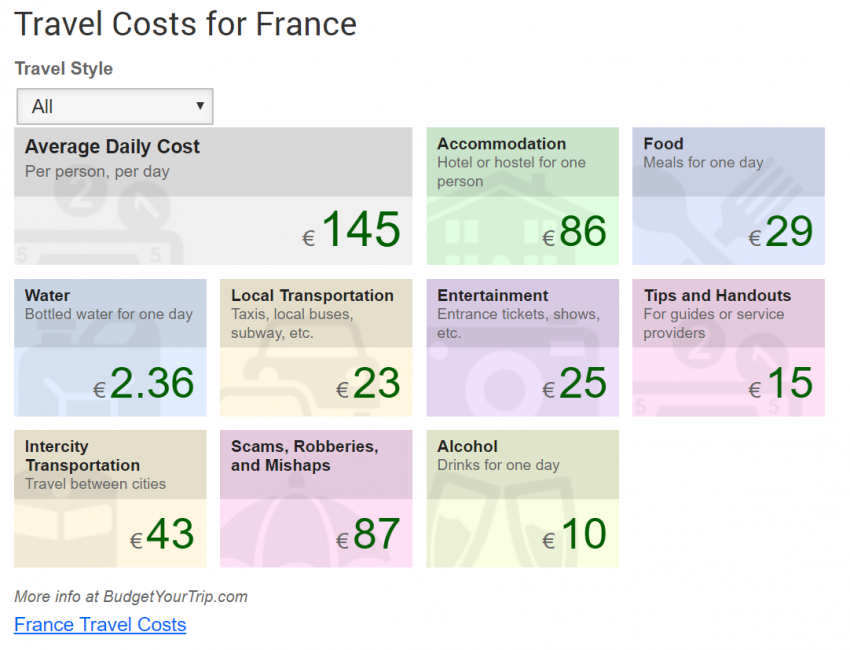
Budget Your Trip is helpful because you can use it to:
- Compare average travel costs between countries.
- Compare cities within the same country.
- Estimate daily costs before booking.
- Understand whether a destination fits your budget.
- Plan around budget, mid-range, or higher-end travel styles.
- Get a starting number for your total trip budget.
A simple way to use the data is to look up your destination’s average daily cost, multiply it by the number of days you plan to travel, and then add flights, insurance, visas, and any major tours or special activities.
For example:
Average Daily Cost x Number of days
+ Flights and/or Train Tickets
+ Major tours or tickets
+ Insurance, visas, and fees
+ Emergency buffer
= Estimated trip budget
Budget Your Trip is the best first step because it helps you understand the overall cost of a place before you get lost in the details.
2. Kayak Flights: Best for Airfare Research
Once you have a destination in mind, airfare is usually one of the next big costs to check. Many online travel agents can be found to check airline tickets, but Kayak is one of the most useful tools for comparing routes, dates, airports, and fare changes.
Users can track flight prices for specific flights, routes, and dates, and can also check the calendar for nearby dates if their plans are flexible. Users can receive email updates when tracked prices change significantly.
Kayak is useful for checking:
- Flight prices for your exact dates.
- Flexible date options.
- Nearby airports.
- Different airlines.
- Route combinations.
- Layover options.
- Price tracking.
- Whether a fare looks unusually high or low.
But flight prices should not be checked in isolation. A cheap flight does not always mean a cheap trip. If hotels, restaurants, and activities are expensive once you arrive, the total trip may still cost more than expected.
It is better to use flight tools alongside destination cost tools. First, check whether the destination is affordable day to day. Then check what it costs to get there.
3. Hotel Booking Sites: Best for Accommodation Prices on Your Exact Dates
Average accommodation costs are useful, but you should also check hotel prices for your actual travel dates. Hotel prices can change dramatically by season, day of the week, local events, holidays, conferences, and neighborhood.
Hotel booking sites are useful because they show real accommodation prices for specific dates. These include sites such as Booking.com, Expedia, Hotels.com, direct hotel websites, and local hotel groups. Keep in mind that many of these sites offer seasonal sales and discounts, and many also have loyalty programs for repeat bookings.
Use hotel booking sites to check:
- Nightly rates.
- Taxes and fees.
- Breakfast inclusion.
- Cancellation policies.
- Room types.
- Family rooms.
- Parking costs.
- Resort fees.
- Neighborhood price differences.
- Whether prices rise on weekends or holidays.
When comparing hotels, look at the total cost, not just the nightly rate. A hotel that looks cheaper at first may become more expensive after taxes, service fees, breakfast, parking, or transportation into the city center.
Location matters too. A cheaper hotel far from the main sights may not actually save money if you need to pay for taxis, rideshares, or long transit rides every day. In walkable cities, a more central hotel can sometimes be better value even if the nightly rate is higher.
4. Hostelworld: Best for Backpacker and Budget Accommodation Costs
If you are a budget traveler, solo traveler, student, gap-year traveler, or long-term traveler, hotel prices may not give you the best picture of your actual accommodation options. In that case, hostel prices are often more useful.
Hostelworld is one of the best places to check dorm beds, private hostel rooms, backpacker neighborhoods, and budget accommodation availability. It is especially useful in regions where hostels are common, such as Europe, Southeast Asia, Central America, South America, Australia, and New Zealand.
Use hostel sites to check:
- Dorm bed prices.
- Private room prices.
- Budget accommodation neighborhoods.
- Reviews from other budget travelers.
- Social atmosphere.
- Kitchen access.
- Laundry availability.
- Lockers and security.
- Whether breakfast is included.
Hostel prices can also help you understand the low end of a destination’s travel cost range. If dorm beds are expensive, that is a sign that the destination may be costly even for budget travelers (this is often the case in major cities in the U.S. and Europe). If dorm beds are cheap and widely available, a lower daily budget may be realistic.
5. Viator and GetYourGuide: Best for Tour and Activity Prices
Tours and activities can be one of the most overlooked parts of a travel budget. Many travelers remember to check flights and hotels, but forget to price museum tickets, guided tours, boat trips, food tours, day trips, national park visits, cooking classes, theme parks, and adventure activities.
Tour marketplaces such as Viator and GetYourGuide are useful because they show real prices for a wide range of travel experiences. Even if you do not book through them immediately, they are helpful for estimating what activities usually cost in a destination.
Use tour and activity sites to check prices for:
- Walking tours.
- Food tours.
- Museum tickets.
- Skip-the-line tickets.
- Boat tours.
- Wine tours.
- Day trips.
- Cooking classes.
- Outdoor adventures.
- Family activities.
- Private tours.
- Airport transfers.
This is especially important in destinations where activities are a major part of the trip. A city like Florence, Paris, Rome, New York, London, Tokyo, or Amsterdam may have many paid attractions. A beach or island destination may have boat trips, snorkeling tours, diving, ferries, or adventure excursions. A wilderness-themed trip may involve permits, guided hikes, shuttles, or park entrance fees.
Activity costs can change the entire budget. A traveler who only plans free sights will spend very differently from someone booking food tours, guided museum visits, and day trips.
6. Official Attraction Websites: Best for Accurate Ticket Prices
Tour marketplaces are useful for estimating activity costs, but the official website is often the best place to confirm exact ticket prices.
For major museums, monuments, historic sites, churches, observation decks, theme parks, castles, palaces, national parks, and cultural attractions, always check the official website before finalizing your budget.
Official attraction websites are best for:
- Current admission prices.
- Opening hours.
- Timed-entry rules.
- Reservation requirements.
- Free-entry days.
- Child, student, senior, and family discounts.
- Seasonal closures.
- Audio guide prices.
- Special exhibition fees.
- Permit requirements.
- Cancellation rules.
This is particularly important if the attraction is a major reason for your trip. If you are going to Paris for the Louvre, Rome for the Colosseum, New York for Broadway, Orlando for theme parks, or Peru for Machu Picchu, do not rely only on estimates. Confirm the official price, booking rules, opening hours, and availability.
Official websites also help you avoid surprise costs. Some attractions require timed reservations even if entry is free. Others have separate fees for towers, special exhibits, gardens, audio guides, or guided access.
7. Omio, Trainline, FerryScanner, and Rome2Rio: Best for Intercity Transportation Estimates
Transportation between cities can be confusing, especially when a route involves trains, buses, ferries, shuttles, flights, taxis, or driving. If you’re not driving your own vehicle, then you’re probably looking at some form of public transportation between destinations. Pricing these routes can sometimes be tricky, especially when multiple options are available. Some might be fast, such as a high speed train in Europe. Others might be cheaper but slower, such as long distance bus companies that operate in both the U.S. and Europe.
Omio is a great place to compare rail and bus routes together. Then you can get the price and time comparisons.
Trainline shows you rail routes, and is great for European train journeys between cities and also small towns.
BusBud is terrific for long distance bus routes, and is especially useful if you’re traveling on a budget. Buses are generally the cheapest method of travel between major cities, even though they might be the slowest.
FerryScanner is fantastic for finding and comparing any journey involving a water route, such as to nearby islands in the Mediterranean, Southeast Asia, or Northern Europe.
Rome2Rio is useful for getting a quick overview of possible routes and approximate costs.
All of these websites are useful for checking:
- How to get between two places.
- Whether a route is easy or complicated, and if connections are needed.
- Train, bus, ferry, flight, and driving options.
- Approximate travel time.
- Estimated transportation costs.
- Whether a side trip is realistic.
- Whether a destination is expensive to reach.
It is especially helpful during the early planning stage. For example, if you are deciding whether to add a small town, island, national park, or second city to your trip, these websites can help you see whether the route is practical.
However, it’s often better to treat the published prices on these websites as an estimate, not the final price. This is because ticket prices can often fluctuate, and the websites sometimes push you to book on an official supplier’s website. You won’t know the exact final price until you’re ready to make the reservation and pay. Once you choose a route, confirm the actual fare with the train company, bus company, ferry operator, airline, or official transit provider.
8. Official Train, Bus, Ferry, and Transit Websites: Best for Final Transportation Prices
After you use a broad transportation tool to understand your options, check the official operator for final prices.
Official transportation websites are best for:
- Exact fares.
- Timetables.
- Seat reservations.
- Discount cards.
- Rail passes.
- Ferry schedules.
- Airport train or bus prices.
- Luggage rules.
- Local transit passes.
- Service disruptions.
- Seasonal routes.
Depending on the destination, these might include national rail websites, regional train companies, bus operators, ferry companies, city transit agencies, airport transfer services, or shuttle companies.
This matters because transportation prices can vary widely. Some trains are cheap if booked early but expensive last minute. Some ferries run seasonally. Some airport transfers cost far more than expected. Some cities have day passes, weekly transit cards, or tourist cards that can reduce costs.
For any transportation that is essential to your itinerary, confirm it with the official provider before you finalize your budget.
9. Numbeo: Best for Everyday Local Price Clues
Numbeo is not a travel-specific budgeting site, but it can be useful for understanding everyday local prices. Numbeo describes itself as a large cost-of-living and quality-of-life database that combines crowdsourced reports, automated market-data collection, and statistical validation.
It’s not specifically for travel costs, but instead it’s for cost of living data.
Travelers can use Numbeo to get a rough idea of everyday costs such as:
- Restaurant meals.
- Groceries.
- Coffee.
- Beer.
- Bottled water.
- Public transportation.
- Taxi prices.
- Basic consumer prices.
This can be especially helpful if you are comparing cities or trying to understand whether daily life is generally expensive in a destination.
However, Numbeo should not replace travel-specific cost research. Local cost of living is not the same as tourist spending. A resident’s grocery, rent, and transport habits may be very different from a traveler’s hotel, restaurant, and activity costs.
Use Numbeo as supporting context, not as your full travel budget. This is actually where Budget Your Trip shines, because it focuses on tourist expenses instead of local cost of living expenses.
10. Restaurant Menus and Map Listings: Best for Food Budget Reality Checks
Food costs are hard to estimate because people eat in very different ways. Some travelers are happy with bakeries, markets, street food, and picnics. Others want sit-down lunches, cocktails, tasting menus, or food tours.
One of the best ways to check food costs is to look at real menus.
Useful sources include:
- Google Maps, Yelp, and OpenTable restaurant listings.
- Restaurant websites.
- Online menus.
- Delivery apps.
- Local café websites.
- Market hall websites.
- Food blogs.
- Review platforms.
Look for the kinds of places where you would actually eat. Do not base your food budget on the cheapest possible meal if you know you enjoy restaurants. Likewise, do not assume every meal will be expensive if you are happy with casual food, fast food, or street food.
Check prices for:
- Breakfast.
- Coffee.
- Casual lunches.
- Sit-down dinners.
- Drinks.
- Desserts.
- Kids’ meals.
- Local specialties.
- Service charges.
- Taxes or cover charges.
Menus make a food budget feel real. If a casual lunch in your destination is usually $15–$20, and dinner is usually $30–$50, you can plan much more accurately than if you simply guess.
Also, make sure to include in your cost calculations if your hotel provides free breakfast. This can save you the cost of a meal, or not.
11. Supermarket and Grocery Websites: Best for Self-Catering Budgets
If you are staying in an apartment, hostel, cabin, campground, vacation rental, or family accommodation, grocery prices may be an important part of your budget.
Supermarket and grocery websites can help you estimate costs for:
- Breakfast supplies.
- Snacks.
- Picnic lunches.
- Bottled water.
- Drinks.
- Baby food.
- Simple dinners.
- Camping meals.
- Family groceries.
This is especially useful for families, long-term travelers, budget travelers, road-trippers, campers, and anyone staying somewhere with a kitchen.
Even if you do not plan to cook full meals, grocery stores can save money on snacks, drinks, fruit, breakfast items, and picnic lunches. In expensive destinations, replacing even one restaurant meal per day with groceries can make a noticeable difference.
Search for major supermarket chains in your destination and look at typical prices. You do not need a perfect grocery budget. You just need enough information to decide whether self-catering will meaningfully reduce your costs.
12. Official Tourism Websites: Best for Free Attractions, Passes, and Local Details
Official tourism websites are often overlooked, but they can be very helpful for travel budgeting. They may not provide a complete trip budget, but they often include local information that price-comparison sites miss.
Use official tourism websites to find:
- Free attractions.
- Museum passes.
- City cards.
- Public transportation passes.
- Local markets.
- Free walking routes.
- Visitor centers.
- Seasonal events.
- Family discounts.
- Parking information.
- Tourist taxes.
- Local festivals.
- Beach or park access information.
Tourism boards are especially useful for finding free and low-cost things to do. Many destinations have excellent parks, viewpoints, neighborhoods, markets, churches, historic streets, gardens, beaches, and walking routes that cost little or nothing.
They are also useful for understanding local passes. A city card or museum pass can save money, but only if it matches your actual itinerary. Use the official tourism site to compare what is included, how long the pass lasts, and whether transportation is part of the price.
Also, many tourism boards for major cities partner with companies that offer all-inclusive discount entry cards such as CityPass and GoCity. These cards provide free or discounted entry into major attractions, and sometimes also provide public transit discounts. Before purchasing, compare the price of the card to the actual discounts provided. Also consider whether you would use the passes based on your travel schedule and travel interests. They could be a good deal, but they could also be a waste of money.
13. Government and Visa Websites: Best for Required Costs
Some travel costs are not optional. These include visas, entry authorizations, tourist taxes, permits, park fees, driving requirements, and sometimes mandatory insurance.
For these costs, official government or destination websites are the safest source.
Use official sources to check:
- Visa fees.
- Electronic travel authorizations.
- Entry permits.
- Departure taxes.
- National park permits.
- Driving permits and vehicle entry rules.
- Required travel insurance.
- City tourist taxes.
- Border fees.
- Customs rules.
- Passport requirements.
This is one area where you should be careful with blogs, forums, and social media. Entry rules and fees can change, and outdated advice can be expensive.
If a fee is required to enter a country, visit a park, drive legally, or stay overnight in a city, confirm it through an official source before you travel.
14. Travel Blogs, Forums, and Trip Reports: Best for Real-World Examples
Travel blogs, forums, Reddit threads, Facebook groups, YouTube trip reports, and family travel blogs can be useful because they show how real people actually spent money on a trip.
These sources are helpful for:
- Sample trip budgets.
- Unexpected expenses.
- Neighborhood advice.
- Money-saving tips.
- Mistakes to avoid.
- Family-specific costs.
- Backpacker budgets.
- Road trip costs.
- Long-term travel examples.
- Recent traveler experiences.
The key is to read them carefully. A travel blogger’s budget might not match your travel style. A backpacker’s spending may be much lower than yours because they stayed in hostels, avoided anything with an entry fee, and ate street food. A luxury traveler’s budget may be much higher because they prioritized high-end hotels, guided tours, and private drivers. A family of four will have different costs than a solo traveler. A trip report from five years ago may no longer be accurate, especially with recent inflation and cost increases in many parts of the world.
Use real-world examples to understand possibilities, not as your only source of truth. They are best when combined with current prices from booking sites, official sources, and destination cost data.
15. Your Own Past Trips: Best for Personalizing the Budget
One of the most useful travel cost sources is your own spending history.
Destination averages are helpful, but your habits matter too. Some travelers naturally spend more on restaurants, taxis, hotels, and convenience. Others are happy with public transportation, simple meals, and free activities.
Look back at your previous trips and ask:
- How much did you usually spend on food?
- Did you take more taxis than expected?
- Did you book extra activities after arriving?
- Did you prefer nicer hotels than planned?
- Did you spend a lot on snacks, coffee, or drinks?
- Did you buy souvenirs?
- Did you choose convenience over savings?
- Did you stay within your planned budget? And why or why not?
- What did you have to cut out of your budget, and were you happy about it?
If you usually spend more than you originally planned, build that into your next trip budget. Do not plan as if you will suddenly become ultra-frugal unless you are truly willing to change your travel habits.
Your past trips can help you adjust the numbers from Budget Your Trip, hotel sites, flight tools, and activity platforms into a budget that actually fits you.
Best Travel Cost Source by Category
Here is a simple way to think about where to look:
- Overall destination cost: Budget Your Trip
- Flights: Kayak
- Hotels: Booking sites and direct hotel websites
- Hostels: Hostelworld
- Tours and activities: Viator, GetYourGuide, and official attraction sites
- Intercity transportation: Omio, Trainline, BusBud, FerryScanner, Rome2Rio, official operators
- Local transportation: City transit websites
- Food: Budget Your Trip, menus, Numbeo, and grocery sites
- Visas and required fees: Government websites
- Free attractions and passes: Official tourism websites
- Real-world examples: Travel blogs, forums, and trip reports
- Personal adjustments: Your own past trip spending
How to Use These Sources Together
The best strategy is to start broad and then get specific.
First, use Budget Your Trip to understand the average daily cost of your destination. This gives you a realistic starting point and helps you compare destinations before you commit.
Next, check the biggest fixed costs: flights and accommodation. These are often the expenses that determine whether a trip is realistic.
Then research the categories that depend most on your itinerary: activities, local transportation, food, and required fees. A traveler who wants guided tours and restaurant meals will need a different budget from someone who plans to walk, cook, and focus on free sights.
Finally, add a buffer. Even with good research, prices change and plans shift. A realistic travel budget should leave room for surprises.
A simple planning process looks like this:
1. Check average destination costs. 2. Price flights. 3. Price hotels or hostels for your actual dates. 4. List your must-do activities. 5. Check transportation between cities and within the destination. 6. Estimate food costs using averages, menus, and grocery prices. 7. Confirm visas, taxes, permits, and required fees. 8. Add a 10–20% buffer. 9. Compare the total with your real budget.
Final Thoughts
Finding travel costs can be easy or hard, and it all depends on knowing where to look. It’s usually about combining the right sources.
Budget Your Trip is the best place to start because it gives you average daily travel costs based on real traveler spending. From there, flight tools, hotel booking sites, hostel platforms, tour marketplaces, official attraction websites, transportation operators, restaurant menus, grocery sites, tourism boards, government sources, and real traveler examples can help you customize the budget for your exact trip.
The more specific your research becomes, the more realistic your budget will be.
Start with the destination’s average daily cost. Then add your flights, accommodation, activities, transportation, food, fees, and emergency buffer. By using the right sources in the right order, you can plan your trip with much more confidence and avoid the unpleasant surprise of spending far more than expected.

Bryan has visited 62 countries, which is exactly one more country than his wife, and she won’t let him forget it! Also an avid photographer, he enjoys entrenching himself within the local culture in order to learn more about the people of a place. He is the co-founder of Budget Your Trip and loves a good adventure, an exotic meal, or a passionate conversation about global events. And he also loves to find out how much stuff costs, which is why he and his wife started Budget Your Trip.
Sign up to our email newsletter to receive sales, deals, and discounts from major travel companies!