Traveling in Australia
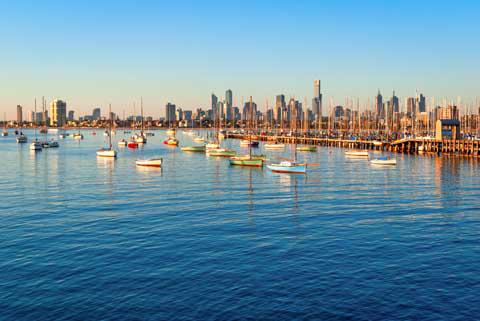 Melbourne, Australia
Australia is both a country and a continent. While it is most famous for it's wilderness and stunning natural beauty, it is also one of the world's most developed and economically thriving countries. Perhaps one of the most famous areas in the country is the "outback," but other national parks and the Great Barrier Reef all have much to offer adrenaline junkies and thrill seekers.
The area has far more to offer than just adventure sports and outdoor settings. There are countless cosmopolitan cities such as Sydney and Melbourne. If you're a beach lover you'll have miles of coastline to explore, and foodies will find many international and local restaurants that receive rave reviews.
For many, Australia seems like a far off destination. It takes an entire day to fly there from North America. It's in the southern hemisphere, so July is cold and Christmas is hot. It's a country that looks strikingly like any other westernized country, but it has animals and vegetation that are uniquely its own. It's these familiarities, yet sharp differences that make this part of the world a favorite destination for the young and old alike.
The days of budget travel in this part of the world are long gone. Not only is it an expensive plane flight from most of the world, but the cost of living has skyrocketed in the area. Simple meals, accommodation (hostels, mid-range, or high-end hotels), and transportation all cost more than you would expect. Despite the increasing cost of travel here, there are some tips you can follow to keep your budget in check. Probably the best cost saving tip is to cook your own meals if you have access to a kitchen. Restaurants are not cheap and you can easily save a lot of money by stocking up on groceries and preparing your own food. If you're renting a vehicle and traveling alone, find other travelers to split the cost. Most people will want to rent a car at some point during their trip. Coordinate with others and you'll easily cut the transportation costs in half.
At A Glance
- Australia is located in the southern hemisphere so the winter there runs between June and August and the summer is between December and February. The winter is also the dry season in the tropical areas and the summer is the wet season. If you're in the southern areas of the East Coast then the rain is more evenly distributed throughout the year but in the southern parts of the country there are more extreme temperature variations.
- This is a very multicultural country with some of the most diverse cities being Melbourne, Brisbane, and Sydney. Each of these cities is well known for its diversity of restaurants which represent a global population. Melbourne in particular is known as the center for the arts while Brisbane has many different multicultural urban villages. If you're looking for the area's best festivals then these are often found in Adelaide where there is a strong German influence.
- Do take note that this country has very strict quarantine requirements. Because it is an island with highly diverse and unique biodiversity, the government works hard to prevent the introduction of invasive species. You must declare all animal and vegetable derived products and your luggage will be thoroughly scanned. If you don't declare something then there is a strictly enforced $220 fine and prosecution in some more serious cases.
- This is a country where you drive on the left hand side of the road. This may be challenging for visitors who are used to driving on the right. As a general rule, overseas licenses are valid for driving up to three months after you arrive. If your license isn't in English you will be required to get an International Driving Permit.
- You will likely need to fly at least once during your trip. Compare plane ticket prices on consolidator websites but purchase the tickets directly from the airlines to avoid any additional charges.
Related:
Looking for a party? Find a hostel in Sydney, Melbourne, Cairns, or along the Gold Coast.
Top Tourist Attractions
The Great Barrier Reef: Perfect for scuba divers and snorkelers alike, this natural wonder is awe inspiring and beautiful. Many divers come to Australia specifically for the Great Barrier Reef, which is the largest continuous coral reef in the world. You can arrange dive or snorkel trips after you arrive through any number of dive shops around town.
Sydney Harbor: The most famous landmark in Sydney, this area is a beautiful natural harbor that is home to both the Sydney Opera House and the Sydney Harbor Bridge. It's probably the most photographed area in Sydney.
Ayers Rock: Uluru is of religious significance to the Aborigines. It's an amazing sight, particularly at sunrise and sunset and is one of the most popular natural landmarks in the country. The easiest way to get to Ayers Rock is by plane.
Realistic Expectations for Your Travel Budget
It's important to have realistic expectations for your budget. Many people assume that they're a "budget" traveler, and some believe that they will spend just $73 per day in Australia, the reality is, most people are not comfortable traveling in that style. Consider what you really enjoy and how you've traveled in the past. Do you prefer resorts, vacation rentals, or hostels? Is dining out important to you? Your answers to these questions will affect your overall travel budget.
What Does It Mean to Be a Budget Traveler?
Many travelers hear that exploring Australia can be done for $73 a day, but if you want to keep some comforts, expect to pay a lot more.
Backpackers might find a way to travel around on that tight budget, but that usually means dorm stays in hostels, eating at budget-friendly restaurants or fast food places, using public transport or walking, and focusing on free attractions.
Fortunately, Australia has a significant number of hostels, especially in Sydney, Melbourne, and Perth. There are cities that have reliable public transit systems that help budget-conscious travelers steer clear of expensive taxi or Uber rides. While everyone appreciates the delicious food in Australia, those on a budget often dine on street food or cook in their hostel. This could lead to missing out on some of the better culinary experiences.
So, are you average?
Couples or families on vacation will probably choose mid-range hotels, popular dining spots, and visits to major museums and attractions that charge entry fees. You'll want to visit the long sandy beaches in Gold Coast, the SkyPoint Observation Deck in Surfers Paradise, or Noosa Main Beach in Noosa Heads. Since most activities have a cost, you should realisticly plan for your budget to be closer to $188 per person, per day.
Seeking a Stylish Getaway from the Daily Routine?
If you're planning a vacation with all the finer things in life, prepare for a budget that can reach $496 per day. If you want upscale hotels, world-class dining, premium excursions, and private drivers, this will put you firmly in the "luxury" category. Some of the more high-priced destinations include Rockhampton and Fraser Island. Another option would be to splurge on a multi-day high-end tour that takes care of everything for you, such as Australian Safari - offered by Globus.