This Aachen travel cost guide gives you a practical look at what travelers typically spend when visiting Aachen. Our trip cost calculator includes average costs from thousands of real trips, covering hotel prices, meals, sightseeing, entertainment, and transportation. Aachen is an exciting destination known for Aachen Cathedral and Aachen Town Hall (Aachener Rathaus).
How much does it cost to travel to Aachen?
A typical traveler spends $200 (€172) per day on a trip to Aachen. This is the average daily price for a vacation in Aachen based on the expenses of other visitors.
Past travelers have spent, on average for one day:
- $79 (€68) on meals
- $237 (€204) on hotels
A one-week trip to Aachen for two people costs, on average, $2,796 (€2,408). This includes accommodation, food, local transportation, and sightseeing.
All of these average travel prices have been collected from thousands of other travelers to help you plan your own travel budget.
Is Aachen expensive to visit?
In Aachen, budget travelers spend $117 (€101) per day on average, mid-range travelers spend $199 (€172) per day, and luxury travelers spend around $336 (€290) per day. These costs are calculated from the reported expenses of previous travelers to Aachen.
Aachen is a smaller destination that charms visitors with a variety of travel styles, expenditure habits, and budgetary considerations. Accommodation options range from budget-friendly hostels to mid-range hotels to high-end luxury properties.
If you're not cautious, Aachen can become costly, but you can save with strategies like looking for discounts and coupons.
Within Europe, which is known to be an expensive region, Aachen is a moderately priced destination compared to other places. The overall cost of travel here is fair for the region and comparable to Brno or Tampere.
For more details, and to find out if it's within your travel budget, see Is Aachen Expensive?
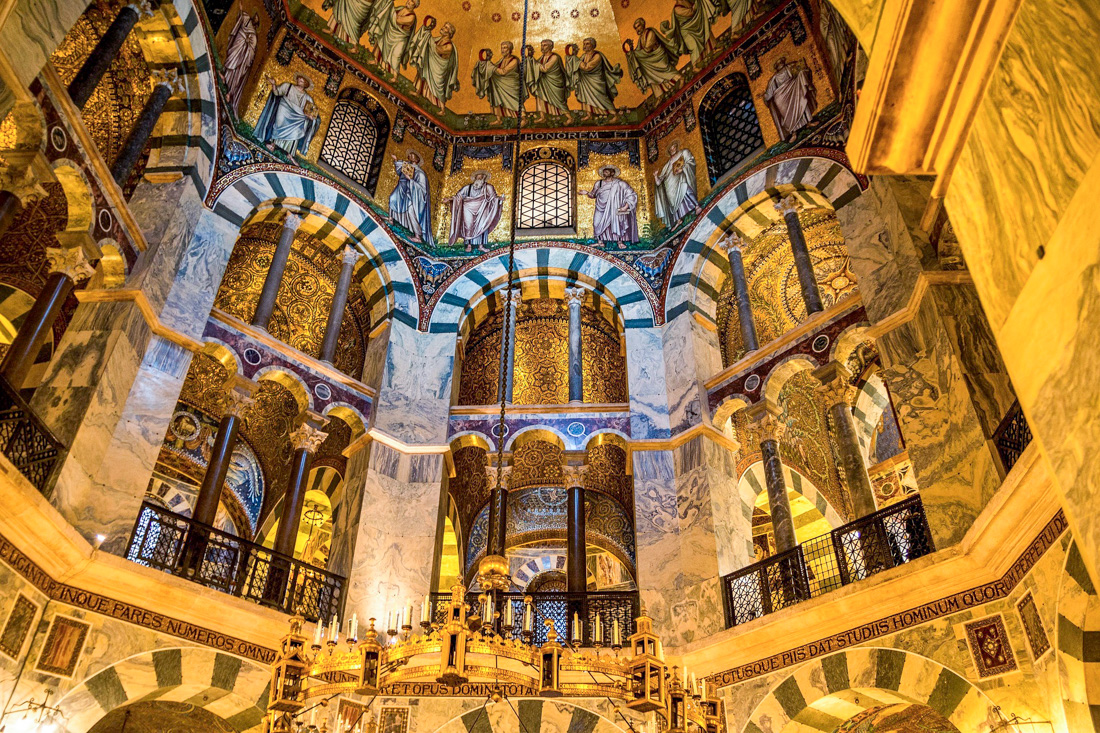 Aachen, Germany
How much money do I need for a trip to Aachen?
The average Aachen trip cost is broken down by category here for independent travelers. All of these Aachen travel prices are calculated from the budgets of real travelers. Also, you can see more details at How much does a trip to Aachen cost?
Aachen on a Budget
|
Category
|
Budget
|
Mid-Range
|
Luxury
|
Accommodation1
For 1 person in double occupancy
|
$52
(€44)
|
$118
(€102)
|
$228
(€196)
|
|
Food2
|
$65
(€56)
|
$79
(€68)
|
$106
(€91)
|
|
Entertainment1
|
$4
(€3.14)
|
$8
(€6.98)
|
$14
(€12)
|
|
Alcohol2
|
$3-8
(€2-7)
|
$6-18
(€5-16)
|
$11-34
(€10-29)
|
How much does a one week, two week, or one month trip to Aachen cost?
A one week trip to Aachen usually costs around $1,398 (€1,204) for one person and $2,796 (€2,408) for two people. This includes accommodation, food, local transportation, and sightseeing.
A two week trip to Aachen on average costs around $2,796 (€2,408) for one person and $5,592 (€4,816) for two people. This cost includes accommodation, food, local transportation, and sightseeing.
Please note, prices can vary based on your travel style, speed, and other variables. If you're traveling as a family of three or four people, the price per person often goes down because kid's tickets are cheaper and hotel rooms can be shared. If you travel slower over a longer period of time then your daily budget will also go down. Two people traveling together for one month in Aachen will often have a lower daily budget per person than one person traveling alone for one week.
A one month trip to Aachen on average costs around $5,991 (€5,160) for one person and $11,983 (€10,320) for two people. The more places you visit, the higher the daily price will become due to increased transportation costs.
Accommodation Budget in Aachen
Hotel prices in Aachen can really fluctuate, especially between budget and luxury options. Expect higher costs during peak season, when rates climb from an off-season average of $96 up to around $179. From $71 for budget options to $274 for luxury hotels, there's something for everyone. Hostels, particularly dorms, are typically cheaper. Book early or travel in the low season for better prices.
Calculated from travelers like you
The average price paid in Aachen for two people for a typical double-occupancy hotel room is $237 (€204). For one person sharing a room, the average price paid for a hotel room is $118 (€102) per night. These costs are from the reported spending of actual travelers.
Looking for a hotel in Aachen? Prices vary by location, date, season, and the level of luxury. See below for options.
If you plan to avoid and visit during the low or shoulder season, you'll find cheaper accommodation rates and fewer tourists.
Warning: exec(): Unable to fork [convert https://content.r9cdn.net/himg/58/49/f1/leonardo-8145475-523958-524984.jpg -resize 320x320 ./images/affiliates/e16876e627367e2eb7e039ef2dafb2b0.jpg] in /homepages/12/d310477359/htdocs/include/utility.php on line 920
-
Warning: exec(): Unable to fork [convert https://content.r9cdn.net/himg/a3/74/06/ice-12761-98872105-381745.jpg -resize 320x320 ./images/affiliates/e4f3f7db51ae4a2b14d5a88431e993df.jpg] in /homepages/12/d310477359/htdocs/include/utility.php on line 920
-
Food Budget in Aachen
One of the biggest draws for travelers is the food, so be sure to savor the local flavors.
Calculated from travelers like you
-
While restaurant and meal prices in Aachen can vary significantly, the average cost of food in Aachen is $79 (€68) per day, per person, based on the spending habits of previous travelers.
-
Food2
Meals for one day
$79
€68
When dining out, the average daily cost for food in Aachen is around $79 (€68) per person, with previous travelers spending from $65 to $106. Generally, breakfast and lunch cost less than dinner, but this will depend on the type of restaurant and what you order.
Typical meal prices in Aachen are as follows:
- Breakfast: $8 to $24
- Lunch: $12 to $32
- Dinner: $24 to $55
- Coffee: $6
- Fast Food or Street Food: $12
Aachen’s most famous local specialty is Aachener Printen, a spiced, firm gingerbread-style biscuit that is especially popular around Christmas but available year-round in bakeries and specialty shops. It can be plain, chocolate-covered, nut-topped, or filled, and it makes one of the best edible souvenirs from the city. You'll find a number of bakeries in the city center which sell these treats, so you won't have to look very far.
Because Aachen sits close to Belgium and the Netherlands, the local food scene also has a cross-border feel, with German bakeries, Belgian-style sweets, cafes, pubs, casual student spots, and international restaurants all easy to find in the center.
For traditional German food, look for dishes such as schnitzel, sausages, roast meats, sauerbraten, potato dishes, seasonal asparagus, and hearty regional plates served with local beer. Historic restaurants and taverns around the old town are good places to try this style of cooking. Aachen is also a strong cafe city, partly because of its university population and its central European setting. A relaxed day here could easily include coffee and Printen in the morning, a casual lunch near the Markt (the square in front of the old town hall), and a more atmospheric dinner in the old town.
Aachen also has several well-regarded restaurants for travelers who want something more refined. The Michelin Guide lists a number of Aachen and surrounding-area restaurants, including dario&, where chef Dario Breuer serves modern French cooking with international and Far Eastern influences. La Becasse is another prominent Aachen restaurant, known for fine French cuisine in the city. For most visitors, the best approach is to mix both sides of the city’s food scene: try local Printen and traditional German dishes, but also leave room for Aachen’s modern restaurants, wine bars, cafes, and international kitchens.
In our opinion, a few of the best places to eat are the Goldener Schwan on the Markt square, Hanswurst if you're looking for a quick bite of bratwurst, and Rose am Dom for traditional German food.
A lot of hotels include breakfast in their price, but some may add it as an extra charge. The price and quality can differ from one hotel to the next. Being aware of this ahead of time can help you figure out if you'll need to shell out more money. The hotel buffet could be delicious, or you might opt for a more affordable treat at a nearby bakery or cafe.
Carry a water bottle with you instead of buying drinks everywhere. It's also good for the environment.
Before embarking on a tour, ensure you know which meals are included. You might have to pay for some food yourself, and that can add to your travel expenses.
Sightseeing and Activities Budget in Aachen
Calculated from travelers like you
-
Sightseeing activities, entertainment, and entrance tickets in Aachen typically cost an average of $8.10 (€6.98) per person, per day based on the spending of previous travelers. This includes fees paid for admission tickets to museums and attractions, day tours, and other sightseeing expenses.
-
Entertainment1
Entrance tickets, shows, etc.
$8.10
€6.98
Some of the most popular sights include:
- Aachen Cathedral (Free)
- Aachen Town Hall (Aachener Rathaus) for €10
The essential sight in Aachen is Aachen Cathedral, also known as Aachener Dom. It was the first German cultural monument added to the UNESCO World Heritage List in 1978, and its history is closely tied to Emperor Charlemagne. The cathedral’s Palatine Chapel is one of the best-preserved buildings from the Carolingian period, and the interior is striking, with mosaics, marble, arches, and a sense of grandeur that feels very different from many later Gothic cathedrals. Even travelers who only have a short time in Aachen should make this their first stop.
Near the cathedral, the Aachen Cathedral Treasury is one of the most important collections of church treasures in northern Europe. It displays reliquaries, liturgical objects, textiles, manuscripts, and medieval artworks connected to the cathedral’s long religious and imperial history. UNESCO notes that the treasury includes major pieces such as the Cross of Lothar, the reliquary bust of Charlemagne, and other precious objects from Aachen’s role in medieval coronations and church history.
A few steps away, Aachen Town Hall (Rathaus) is another major landmark. Built on the site of Charlemagne’s palace, it reflects the city’s medieval importance and gives the main square much of its historic character. Nearby, the Centre Charlemagne is the city museum and a useful place to understand Aachen’s development from Roman spa town to imperial capital to modern university city. Other worthwhile sights include the Elisenbrunnen, a neoclassical pavilion that recalls Aachen’s thermal-spring heritage, the Couven Museum, which focuses on historic interiors and bourgeois life, and the Ludwig Forum, a contemporary art museum housed in a former umbrella factory. Aachen’s old town is compact, so many of these landmarks can be combined into a relaxed walking route.
One of the best things to do in Aachen is simply walk through the old town. The area around the cathedral, Katschhof, Markt, Hof, and the small lanes nearby is full of historic buildings, fountains, cafes, bakeries, and little details that reward slow exploring. Aachen has several distinctive fountains, including the Puppenbrunnen and Karlsbrunnen, and these small landmarks help make the city feel playful as well as historic. A guided walking tour can be useful because Aachen’s story is layered: Roman baths, Charlemagne, medieval coronations, spa culture, borderland identity, and modern student life all overlap in a small area.
For relaxation, Carolus Thermen Bad Aachen is one of the city’s signature experiences. Aachen has been known for its hot springs since Roman times, and the modern thermal bath complex continues that tradition with warm mineral pools, sauna areas, spa treatments, and indoor-outdoor relaxation spaces. It is especially appealing in cold or rainy weather, and it gives visitors a different kind of activity beyond museums and sightseeing.
Aachen also has several cultural events and seasonal highlights. The biggest international event is CHIO Aachen, a major equestrian festival that draws riders and spectators from around the world. Aachen Tourism also highlights concerts, festivals, street festivals, wine events, the Christmas market, and other cultural programs throughout the year. For green space, visitors can walk up to Lousberg, a hill and park area north of the center with views over the city, or use Aachen as a base for day trips into the Eifel region, the Dutch city of Maastricht, the Belgian city of Liège, or the Three-Country Point near Vaals.
Nightlife Budget in Aachen
Calculated from travelers like you
-
The average person spends about $12 (€10) on nightlife and alcoholic beverages in Aachen per day. The more you spend on alcohol, the more fun you might be having despite your higher budget.
-
Alcohol2
Drinks for one day
$12
€10
While nightlife is a key part of many trips, scaling back on drinks can help free up some extra cash in your budget.
Travel cost data last updated: Jun 3, 2026
Traveling in Aachen
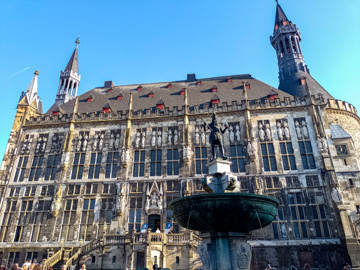 Aachen, Germany
Aachen is one of Germany's most historically important small cities, best known for its connection to Charlemagne, its impressive cathedral, and its long tradition as a spa town. Sitting near the borders of Belgium and the Netherlands, Aachen has a slightly international feel, with easy cross-border day trips, a lively student population, and a compact old town that is easy to explore on foot. It is not as large or overwhelming as Berlin, Munich, or Cologne, which makes it a great choice for travelers who want history, atmosphere, and good food without needing several days to get oriented.
The city's most famous attraction is Aachen Cathedral, Germany's first UNESCO World Heritage Site and one of the most important historic churches in Europe. Aachen was Charlemagne’s favorite residence, and the cathedral became a major symbol of imperial power in medieval Europe. Today, visitors come to see the cathedral’s octagonal Palatine Chapel, the Cathedral Treasury, the historic town hall, and the atmospheric streets around the Markt and Katschhof.
Aachen is also a good destination for travelers who enjoy slower, experience-based city breaks. You can spend the morning visiting medieval landmarks, the afternoon relaxing in thermal baths, and the evening eating local German food or modern international cuisine. In winter, Aachen becomes especially popular for its Christmas market, which fills the streets around the cathedral and town hall with lights, mulled wine, and the smell of Aachener Printen, the city’s famous spiced gingerbread-style biscuit.
Neighborhoods & Around
The city center of Aachen is easily walkable. Within the city are plenty of restaurants, hotels, and the major sights and attractions. Around the city is a ring road, along which you'll find more hotels and some modern shopping areas. The main train station is to the south of the city center, but still within walking distance.
Realistic Expectations for Your Travel Budget
Having realistic expectations for your budget when visiting Aachen is important. While it's tempting to aim for a shoestring budget, most travelers don't find that style of travel to be enjoyable. Think about your priorities and how you've traveled in the past. Do you prefer staying in budget accommodations or enjoying more luxurious options? Do you like to explore attractions and dine out at local restaurants? These choices will influence your travel costs and itinerary.
What Does It Mean to Be a Budget Traveler?
You might consider yourself a budget traveler, but if you're not ready to give up some comforts, prepare to spend a lot more than the $117 per day that younger budget travelers manage.
Backpackers will usually stick to this shoestring budget by staying in hostel dorms, dining at the cheapest spots such as fast food places, using public transit, and mostly visiting free attractions.
Fortunately, you can find plenty of hostels in Aachen, including Jugendherberge Aachen. These hostels offer inexpensive dorm lodging and a lively social scene, but amenities are often minimal.
What Makes You an Average Traveler?
If you're traveling for leisure as a couple or family, you'll probably prefer a mid-range hotel, dine at well-known restaurants, and explore the major museums and attractions that charge entry fees. When visiting Aachen, you'll want to see Aachen Cathedral or Aachen Town Hall (Aachener Rathaus). Remember, most activities come with a cost. Therefore, it's reasonable to anticipate that your daily budget will be around $199 per person, per day.
Want to Experience a Luxurious Trip?
If you want an all encompassing getaway with top-notch amenities and exceptional service, get ready for a daily cost around $336. Staying in upscale hotels, dining at acclaimed restaurants, indulging in lavish activities, and using taxis or private drivers to navigate the destination will require a more luxurious budget.
We've been gathering travel costs from tens of thousands of actual travelers since 2010, and we use the data to calculate average daily travel costs for destinations around the world. We also systematically analyze the prices of hotels, hostels, and tours from travel providers such as Kayak, HostelWorld, TourRadar, Viator, and others. This combination of expenses from actual travelers, combined with pricing data from major travel companies, gives us a uniqe insight into the overall cost of travel for thousands of cities in countries around the world. You can see more here: How it Works.